Barry Rodgerig grew up in the Sunshine Coast hinterland when timber was king. His mother made it to ninety-one and chose her own exit. This is the story of a man shaped by sawmills, sovereignty, and the quiet authority of knowing when enough is enough.
His mother made it to ninety-one. Perfect health. Nothing wrong with her at all. She just decided she'd had enough. Wouldn't take the medication. I don't want to live anymore. That was the bloody end of it.
There is a kind of authority in that. A sovereignty over your own exit that most of us will never possess. Barry tells you this without sentiment. It is simply what happened. A woman looked at the world and said no more of this, and the world obliged.
She wouldn't take the medication. I don't want to live anymore. That was the bloody end of it.
Barry Rodgerig turned eighty not long ago. The councillors sent cards. He lives on the property he came to in 1972, and when he arrived there was nothing here. He says this several times, the way you'd repeat a prayer or a curse. There was nothing here. We built all that since '72. The whole thing was nothing here.
The place is a sprawling cathedral of sheds and machinery and rusted steel skeletons, the vertebrae of a working life arranged across red soil that eats everything metal. It's like cancer in humans, Barry says. It just eats and eats until it kills you. He says this the way a man describes weather. Not with bitterness. Just with the understanding that entropy is the only god that keeps its promises.
A little Italian tractor, a Valpapana, sits near the front gate. Lombardini diesel under the hood. It hasn't run for a while but Barry reckons an hour or two on it and it'd fire up. His little brother put quite a lot of posts in with the driver on the back when he was still around.
When he was still around.
There was nothing here. We built all that since '72. The whole thing was nothing here.
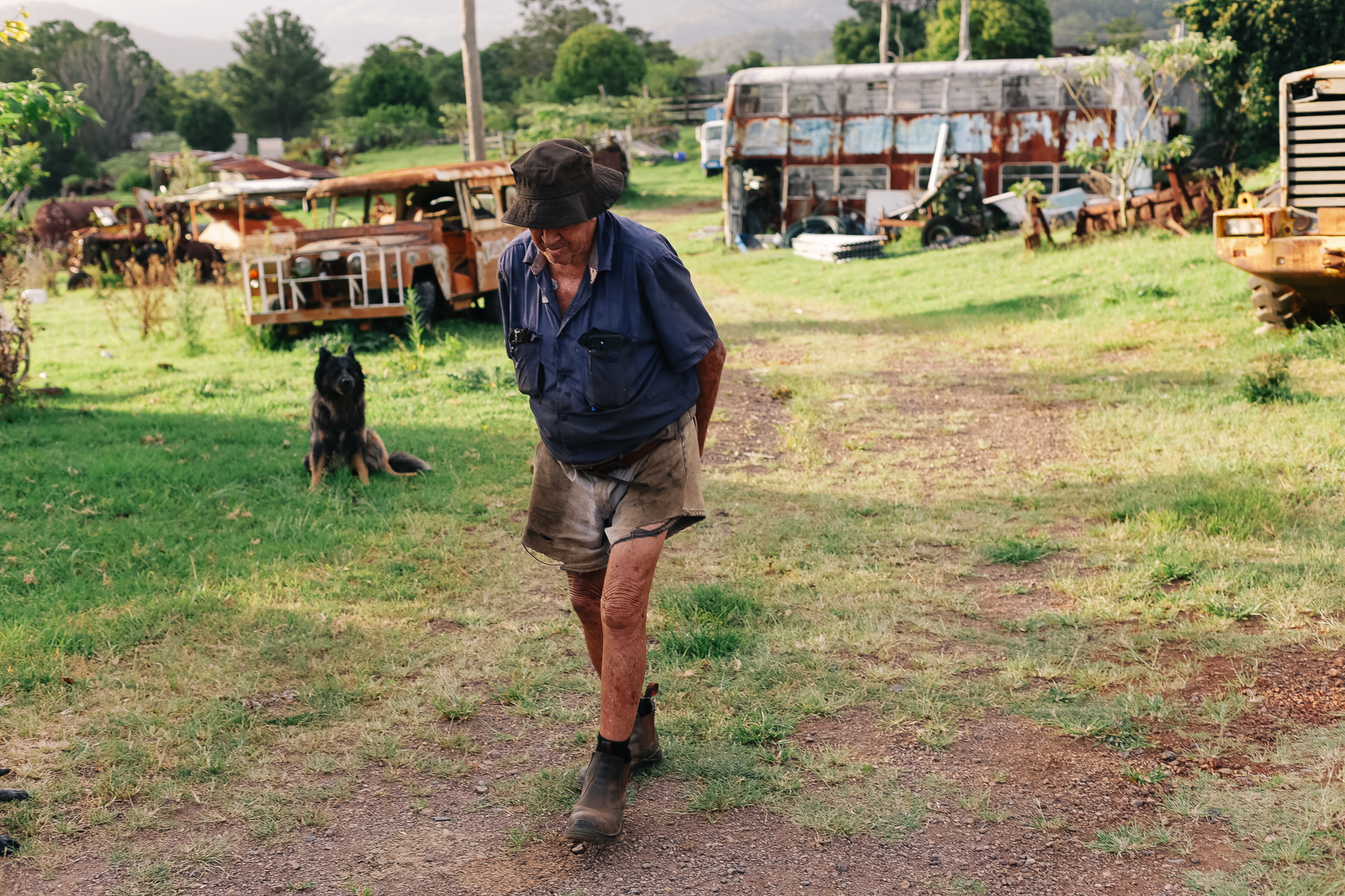
The workshop holds the mechanical memory of a lifetime. Trucks used to fit in there but now there's too much accumulated history, too much gear and parts and things that might be useful someday. The ants have had a go at the timber. They give everything a hiding in this country. White ants, red soil, time. The unholy trinity of the hinterland, working in shifts, taking the place apart while Barry puts it back together.
Out in the yard sits an old AB184, manufactured the year Kennedy was shot. For many years Barry cut logs with it before retiring it to a tipper. The industry was different then. Single axles gave way to tandem drives as the government got greedier and you had to move more stuff for less money.
And then the hippies came.
They stopped the logging. They ruined it.
He says this flat, the way you'd report a death. No performance in it. No appeal. Just a man stating what happened to his livelihood the way you'd read out a coroner's finding.
There was a big hippie community at Crystal Waters, just down the hill. They doped the gear, contaminated fuel, poisoned motors. At Bruinpocket Dam, someone who knew exactly what they were doing took a plate off the top of a winch, removed a bolt, dropped it down the hole, put everything back together neat as surgery. When they started the tractor the winch blew itself apart. They tipped half a gallon of petrol down the air cleaners of two D9s. One put a hole out through the side of the engine when it fired up.
No insurance covered sabotage. You just wore the bill yourself.
There is something in this that goes beyond Barry's particular grievance. The collision between those who work the land and those who wish to save it, both convinced of their own righteousness, neither able to see the other as fully human. The hippies who contaminated his fuel and then, when the clearing was done and the ground dried up, came across and cut all the trees up for firewood and took them to their bakery. Barry still carries this. Not as ideology. As insult.
That peed me off.
The understatement of a man who learned early that rage is a luxury for people who don't have to fix the thing that's broken.
The cattle yards haven't changed much. The concrete dip sits empty. There's pour-on stuff now, and a back rubber in the paddock for the buffalo fly. The white ants have built a massive nest near the yards, a monument to persistence and appetite, which in this country amounts to the same thing.
Barry's first job was carrying water to feed pigs at Peachester, where the family lived for twenty-five years before coming here. That's where he learned to hate them.
They're just buggers. You have them in the pen, they can get out of the pen that you can never get in. You shoo the dog, they go round and round and round, can't find the hole. I open the gate and go in. Ten minutes later they're back out again. They know where the hole is.
His old man dealt in pigs, buying up old boars, and that's why Barry can't eat pig meat. The boars stink. He can tell you whether your bacon came from a sow or a boar just by the smell when you put it in the pan. This is not refinement. This is a body trained by decades of proximity to know what it knows. The nose as archive.
Three Blue Heelers live with Barry. The female he calls Samantha Series 3. He's had three Samanthas and five dogs named Diesel over the years. He just keeps the same names...like reincarnation, though they're never quite the same.
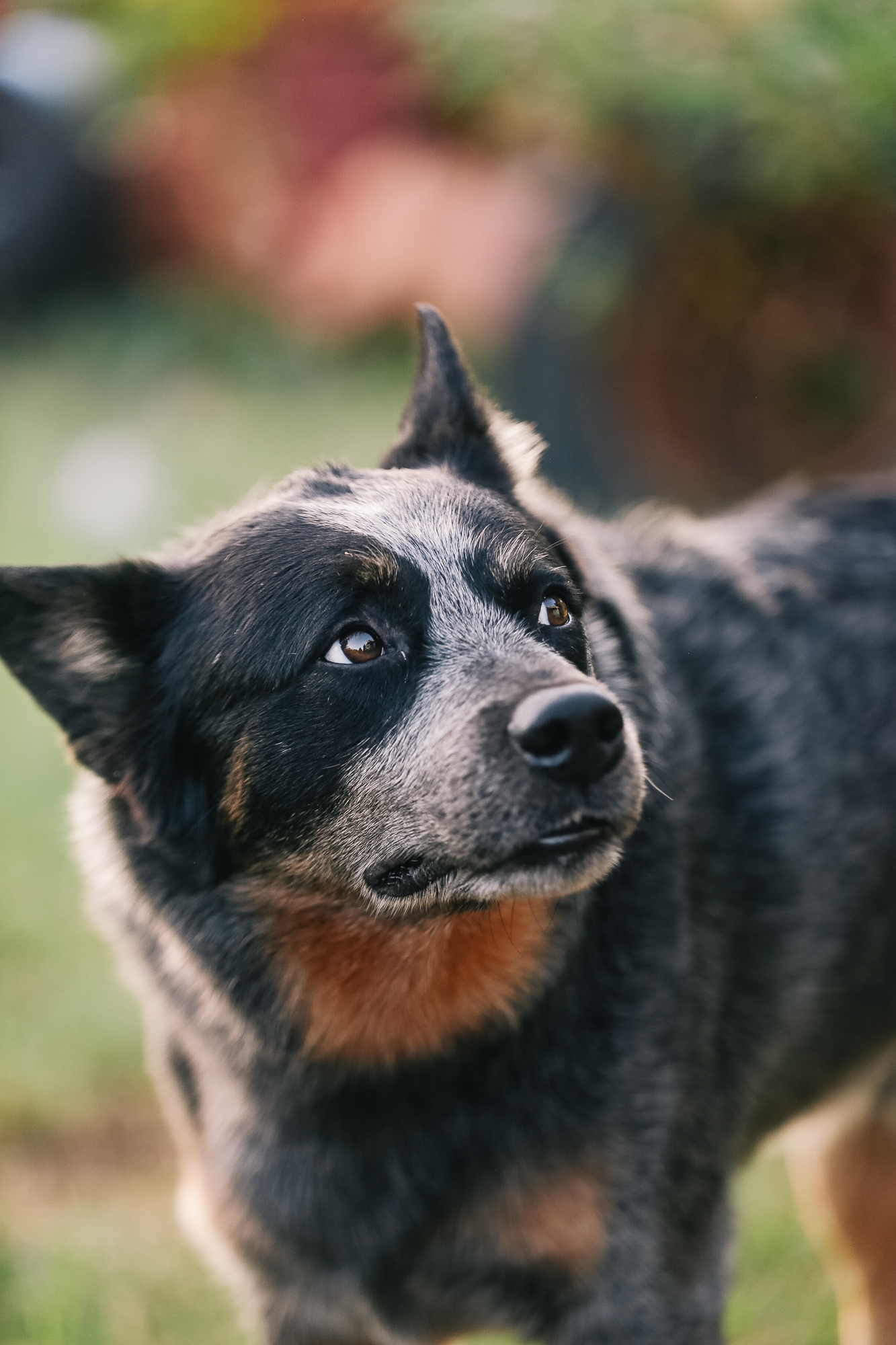
You never get two the same. They're never the same.
There is a whole theology buried in that sentence. The names persist but the creatures change. The shape of devotion remains while its subject keeps dying and being reborn in a different coat. It costs more to feed the four dogs and fourteen parrots than it does to feed Barry himself. He doesn't say this as complaint. He says it as fact. The animals eat. Barry eats what's left. The hierarchy has been established by love, which is the only hierarchy worth respecting.
Among the machinery sit two Blitz trucks, both ex-Army, both about eighty years old now, the same age as Barry, who was hatched three days after the war ended. He still remembers his mother talking about Brisbane when it finished. Cars dragging tins through the streets. Parties going on for three days.
There's a 1957 Land Rover he'd like to restore if he lives long enough. The head's off it at the moment. It's all there, a nice shape. He doesn't know if he'll last.
At eighty, Barry says, all your get up and go gets up and goes.
They won't let him drive the heavy trucks anymore. Took him from heavy haulage down to light rigid, even though he could drive them on his own property. But why would you want to drive them in here? You've got to go out on the road. The logic of regulation meeting the logic of a man who has been driving since before regulation existed.
He doesn't want to kill himself anymore. He says this casually, the way you'd mention you've given up sugar.
I got that way now that I just make a living. I don't want to kill myself anymore. Don't want to work for the bank managers anymore. This is all I've done most of my life. Worked for the bank manager.
The quarry is where he goes. He drives the dozer down there, digs gravel, stacks it. Doesn't listen to music. Doesn't need to. The machine has its own rhythm and the rain has another and together they make something that isn't quite silence and isn't quite sound.
I love going down to the quarry. Just digging the gravel and stacking it. It stops the squeaks of the tracks. You don't get any stone smoke or dust or anything. It's all clean and it's nice and peaceful when it's raining.
The property spreads out under the Queensland sun. A working museum of timber and diesel and Blue Heelers and red soil. The sheds are covered in vines now, which probably makes them cooler but definitely makes them rustier. A lot of people have said the place is like a museum. Barry doesn't argue with this. He just lives in it.
Down at the quarry, when it rains, he closes the door of the big tractor, switches on the air conditioning, and digs in peace. Not making much money. Making a living. Keeping flour in the bag. Surrounded by the machinery that has marked out his eighty years on this earth, the steel and the diesel and the red soil that eats it all, slowly, the way time eats everything, the way his mother decided she'd had enough, the way the brother died, the way the hippies came, the way the pigs found the hole every time.
The rain settles the dust. Makes everything clean.
That's where he loves to be.
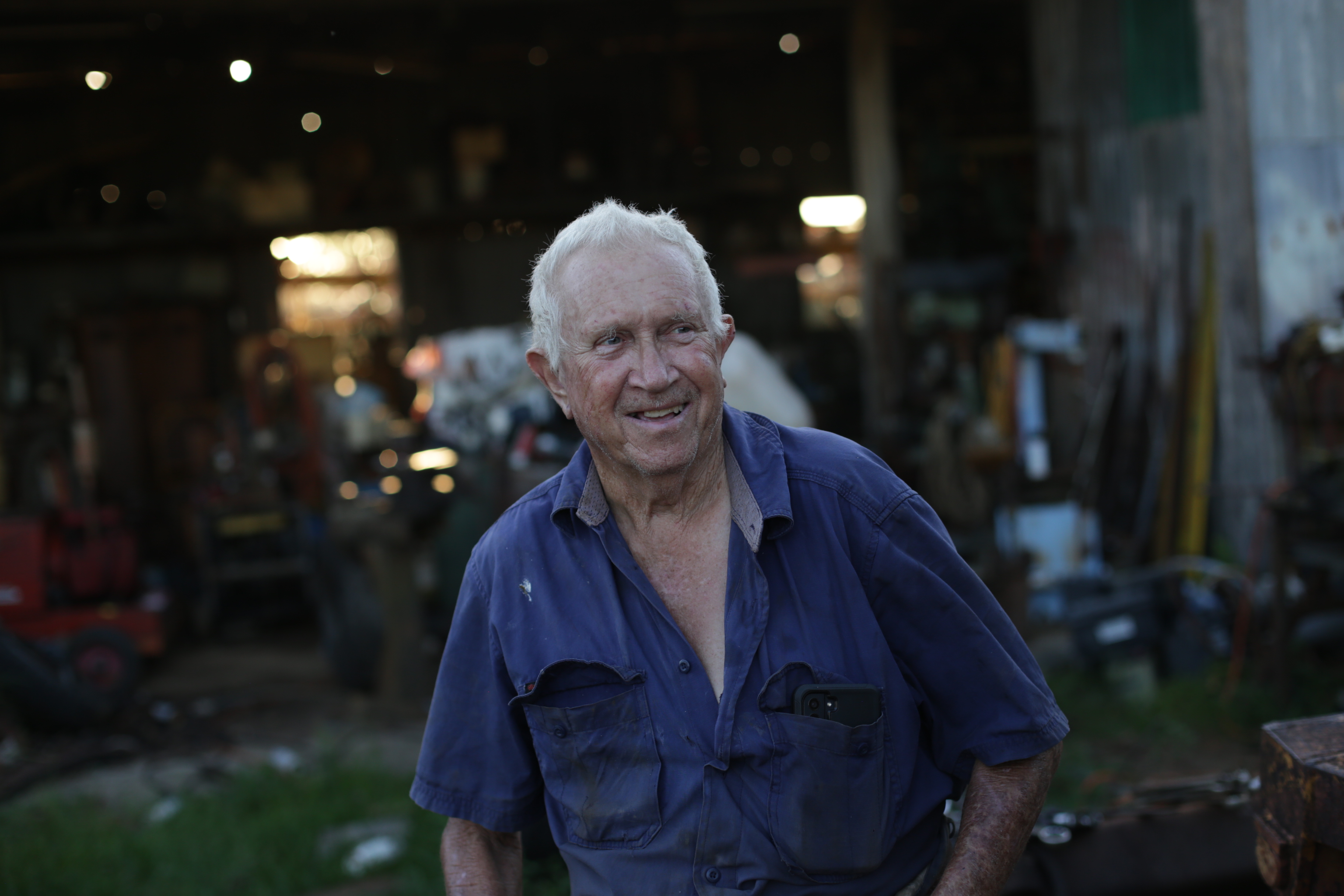
Barry Rodgerig
Witta, Queensland, Australia
Barry Rodgerig is a community storyteller and featured contributor to the Empathy Ledger platform.

Stories like this matter
Help amplify voices from communities that deserve to be heard. Share this story or stay connected for more.