We chose a spiral as our mark because it is not ours to invent. It belongs to every culture that has ever watched a fern unfurl, traced a shell with a fingertip, or sat in a circle and listened while someone older spoke. The spiral is ancient, universal, and crucially, it begins from the inside.
This matters because the stories on this platform do the same thing. They do not arrive as press releases or campaigns. They unfurl. A storyteller sits down, often with someone they trust, and begins to speak. The story was always there, coiled inside lived experience. The telling is the unfolding.
Dadirri: The Deep Listening
In the Daly River region of Australia's Northern Territory, the Ngangiwumirr people practice Dadirri, inner deep listening and quiet still awareness. Dr. Miriam-Rose Ungunmerr-Baumann describes it as something that Aboriginal people have known for thousands of years:
“In our Aboriginal way, we learnt to listen from our earliest days. We could not live good and useful lives unless we listened. This was the basis of all learning… We are, by nature, parsing the world through listening.”
Dadirri is not passive. It is not waiting for your turn to talk. It is a practice of presence, of being so still that the story comes to you, rather than you going to extract it. This is the fundamental distinction between a platform that receives stories and one that extracts them.
Empathy Ledger exists to receive. The spiral-as-ear is our way of saying: we are here to listen first. The platform opens inward, like the ear canal, like the spiral of a fern frond that has not yet unfurled. What arrives is up to the teller.
The Spiral Across Cultures
What astonished us, as we researched this mark, is that the spiral carries meaning in virtually every culture whose stories we are privileged to hold:
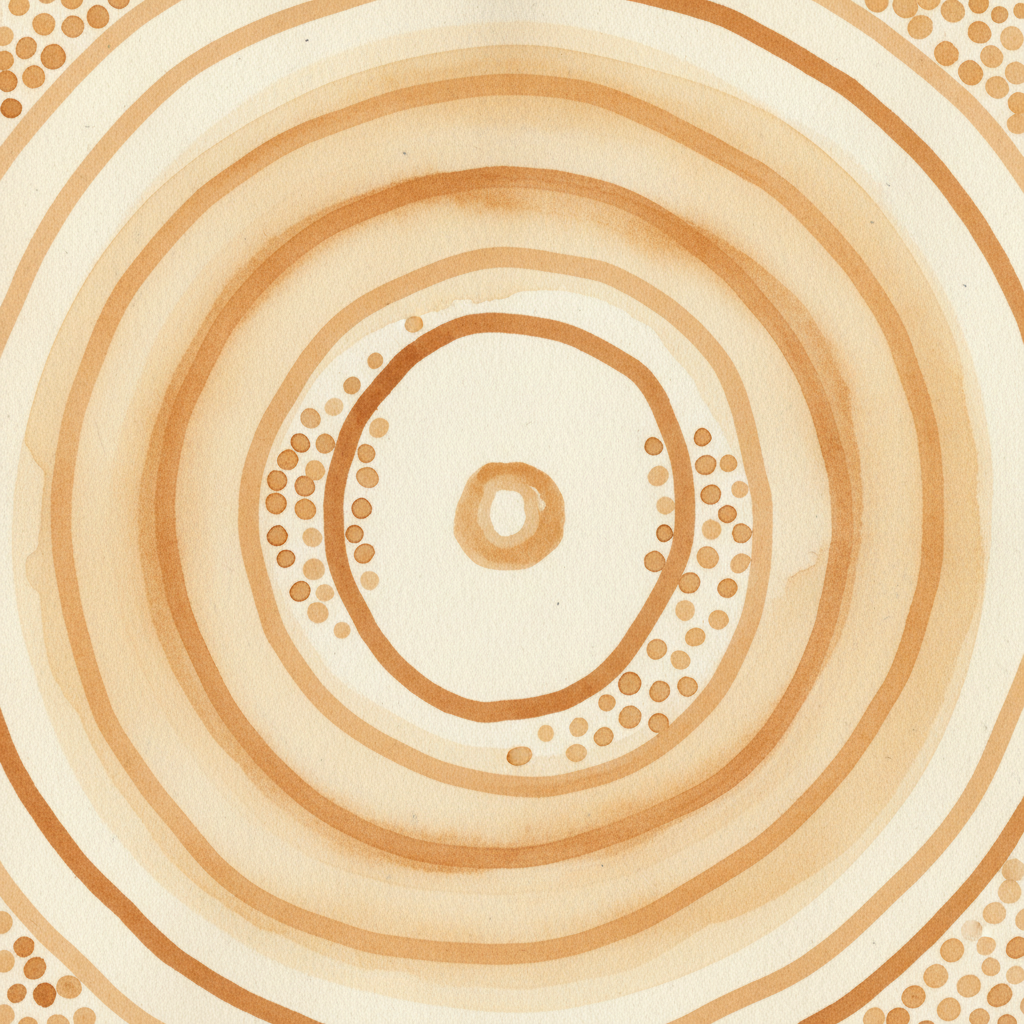
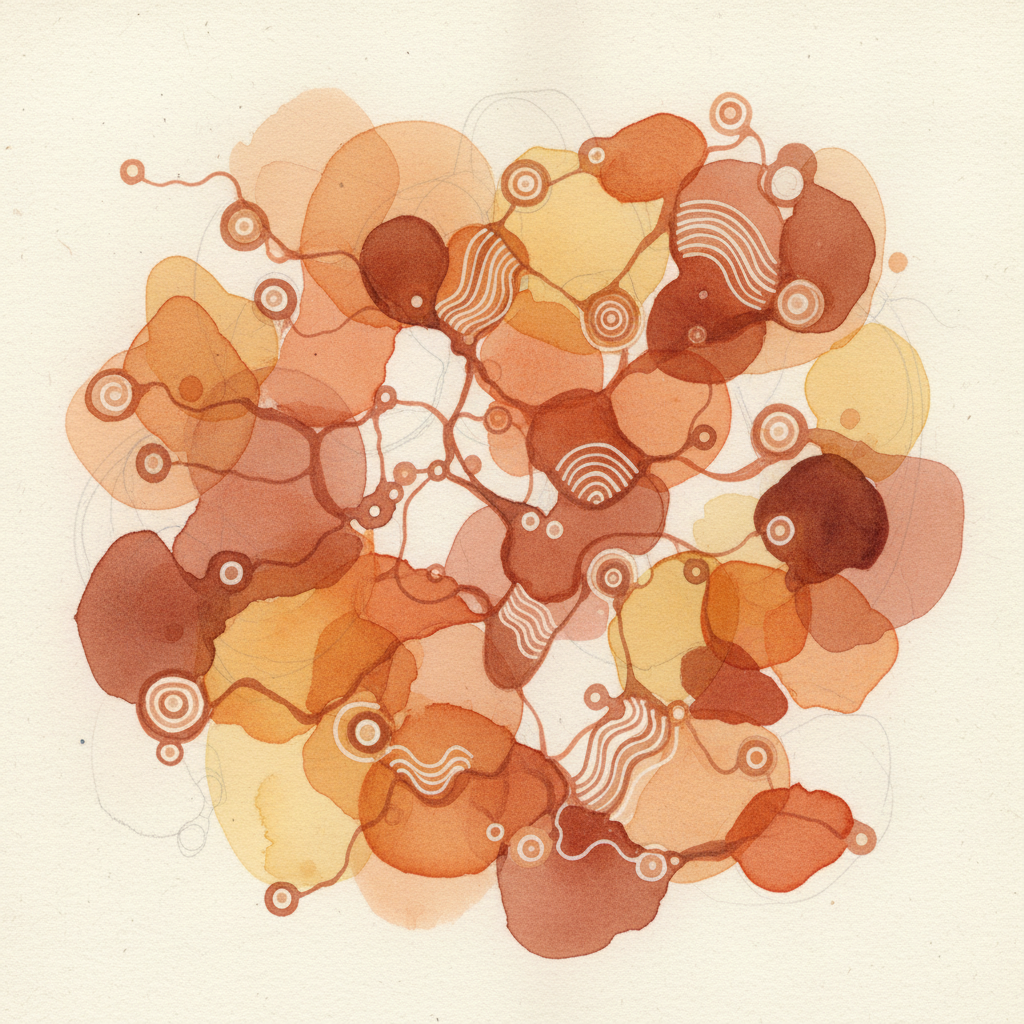
In Aboriginal Australian art, concentric circles represent waterholes, camp sites, and places of ceremonial significance. Lines connecting them are ancestral travel routes. The Papunya Tula painters of the Western Desert developed a practice of using dot overlays to control visibility, allowing paintings to exist publicly while obscuring sacred content from uninitiated viewers. This is data sovereignty in paint, decades before anyone coined the term.
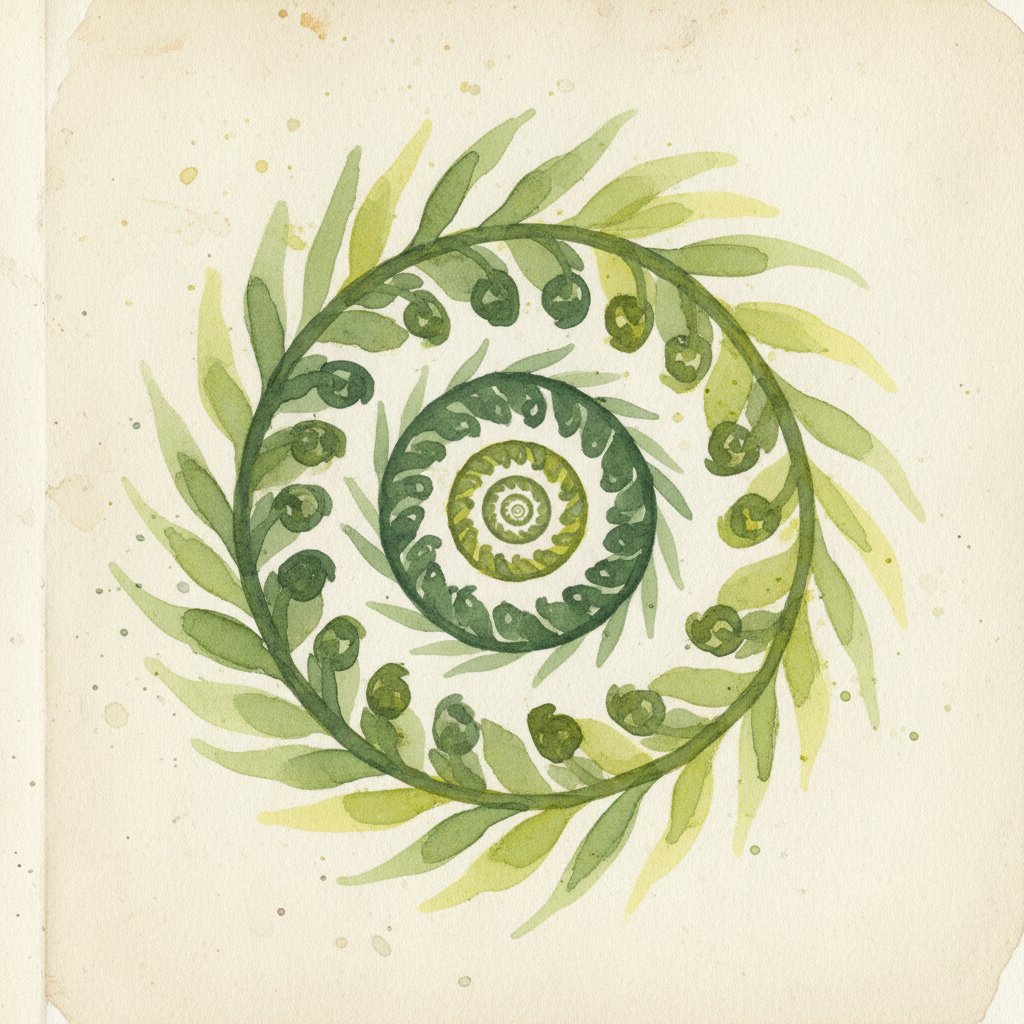
In Māori tradition, the koru, the unfurling fern frond, symbolizes new life, growth, strength, and peace. It speaks of perpetual movement and return to the point of origin. A story goes out into the world but always belongs to where it came from. Always.
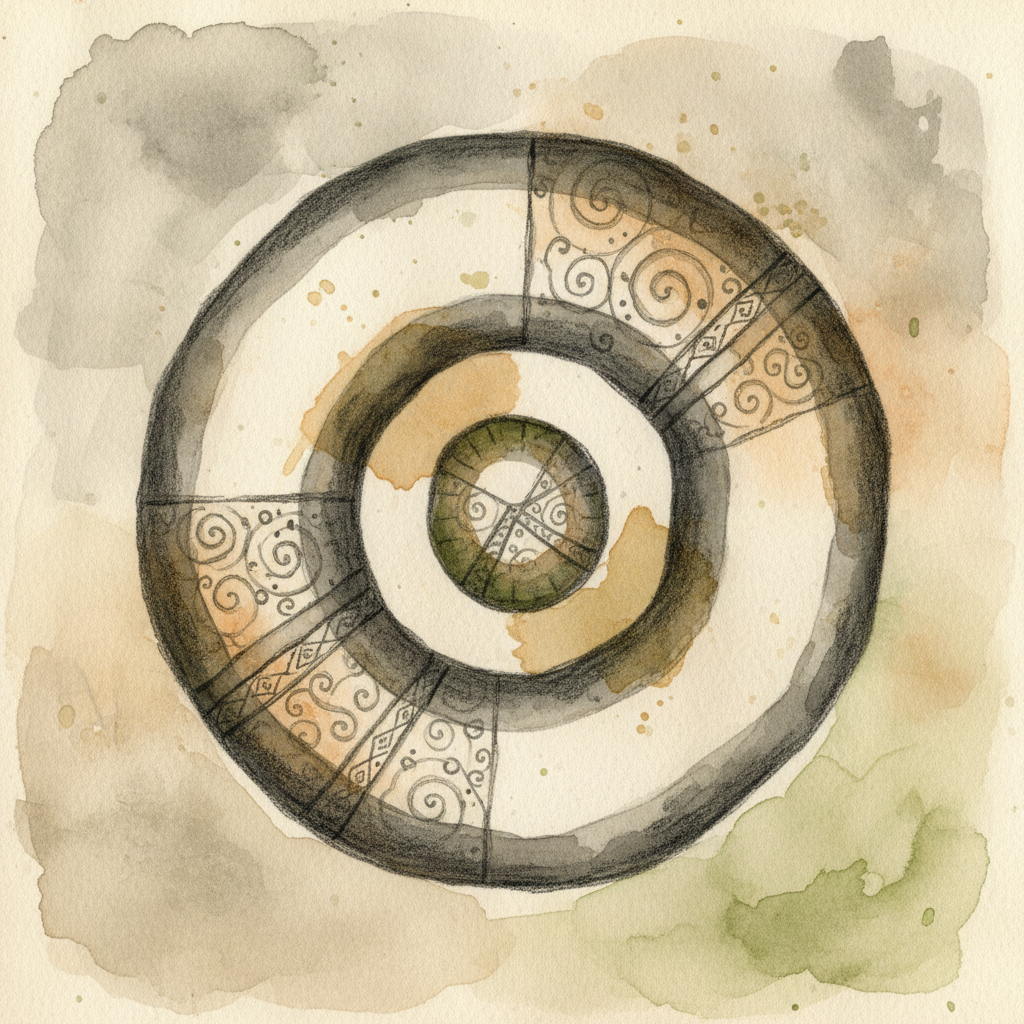
In Celtic tradition, the triskele at Newgrange in Ireland (carved around 3200 BCE, older than the pyramids) encodes triadic concepts: life-death-rebirth, spirit-mind-body. The spiral is time made visible.
In Akan and Ghanaian culture, the Adinkra symbol system uses logarithmic spirals discovered through observation of nature: shells, vines, water currents. These are stamped onto cloth that marks births, funerals, and the ceremonies that bind communities together.
In the mathematics of nature, the Fibonacci spiral appears in sunflower seed heads, galaxy arms, hurricane eyes, and the double helix of DNA. The fern unfurls at approximately 137.5 degrees, the golden angle, optimizing each frond's access to light. Growth happens not by addition from the outside but by unfolding from within.
Stories Are Not Campaigns
We need to say this plainly: Empathy Ledger is not a media company. It is not supporting a brand. It is not a content pipeline. The stories here are not “user-generated content.”
They are a grandmother telling her grandchildren where the water runs. They are a farmer explaining why this soil matters. They are a young person finding words for something they have felt their whole life but never heard anyone else say out loud.
These stories carry across borders. That is their power. A story told in Alice Springs can crack open a heart in Dublin. But the story never stops belonging to the person who told it. It travels, but it does not leave home.
This is what the spiral teaches: movement without departure. Growth without extraction. Connection without possession.
Story Sovereignty
The First Nations Information Governance Centre developed the OCAP principles (Ownership, Control, Access, Possession) to ensure that Indigenous communities maintain authority over their own data and narratives. These principles are not a feature we added to the platform. They are the foundation it is built on.
In practice, this means:
- Consent is not a checkbox. It is an ongoing conversation. A storyteller can change their mind at any time, about what is shared, who sees it, and how it is used.
- Cultural protocols are first-class features. Not afterthoughts. Content can be restricted by community, ceremony, gender, or season, because that is how knowledge has always worked.
- Attribution travels with the story. The storyteller's name, community, and cultural context are inseparable from the narrative. There are no anonymous extractions here.
- Communities own the data. We hold stories in trust, not in ownership. The platform is a dilly bag, a safe keeping place, not an archive that outlives consent.
Changing Hearts, Not Minds
The world does not need more arguments. It needs more understanding. And understanding does not come from data, statistics, or position papers. It comes from the moment when you hear someone else's story and feel it resonate in your own chest.
That resonance is what we named ourselves after. Not empathy as a soft skill or a corporate value. Empathy as a physical event. The moment when the spiral in your ear receives a vibration from someone else's truth and your body recognizes it.
The ledger is the record of those moments. Not a financial ledger of debits and credits, but a keeper's journal: who spoke, what was said, why it mattered. Written by hand, because some things should not be automated.
Community-led change does not happen because someone designed a campaign. It happens because enough people listened to enough stories that they could no longer look away. The spiral widens. The resonance builds. And slowly, soulfully, something shifts.
This is stories for stories' sake.
This is listening for listening's sake.
The rest follows.